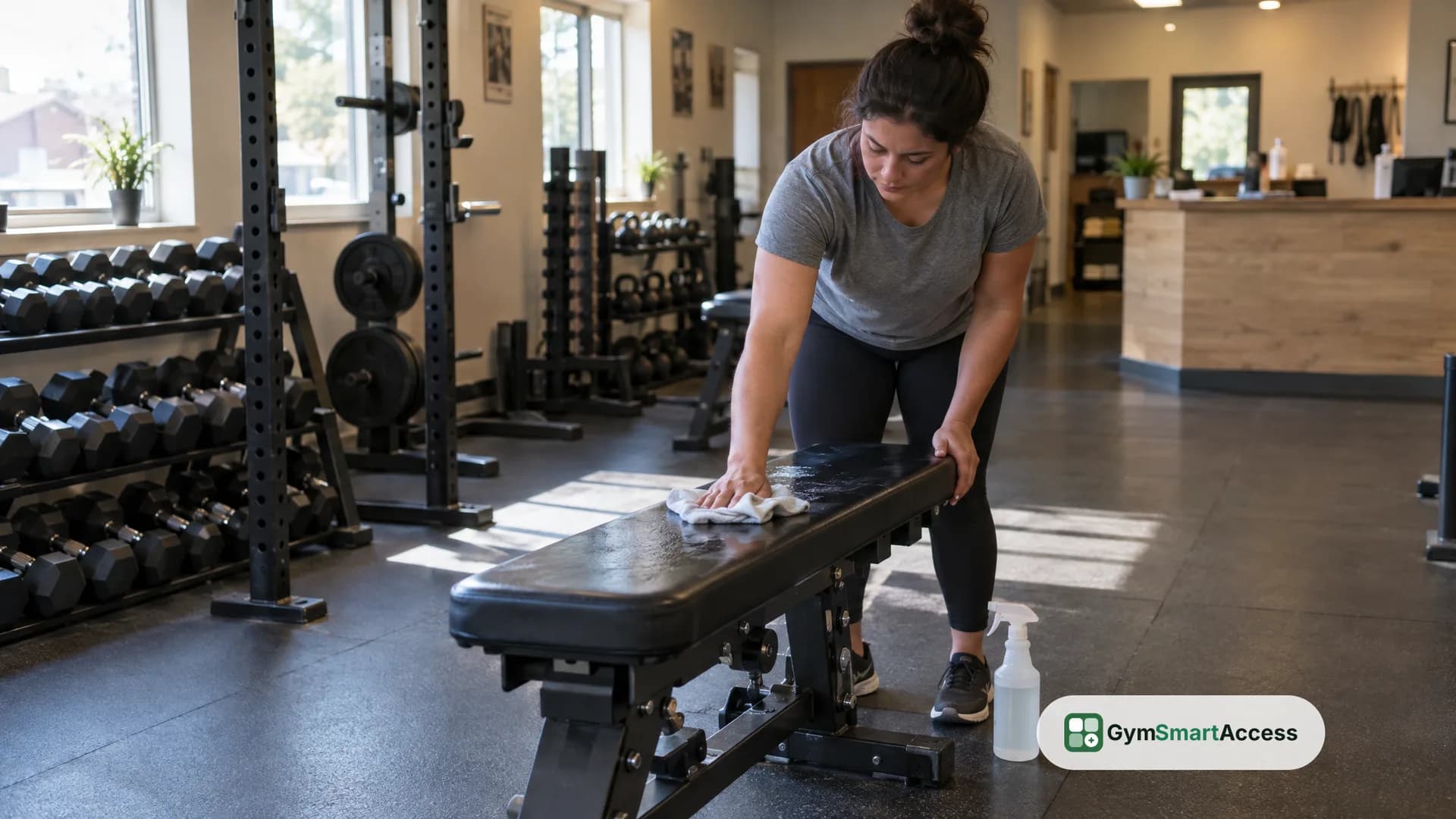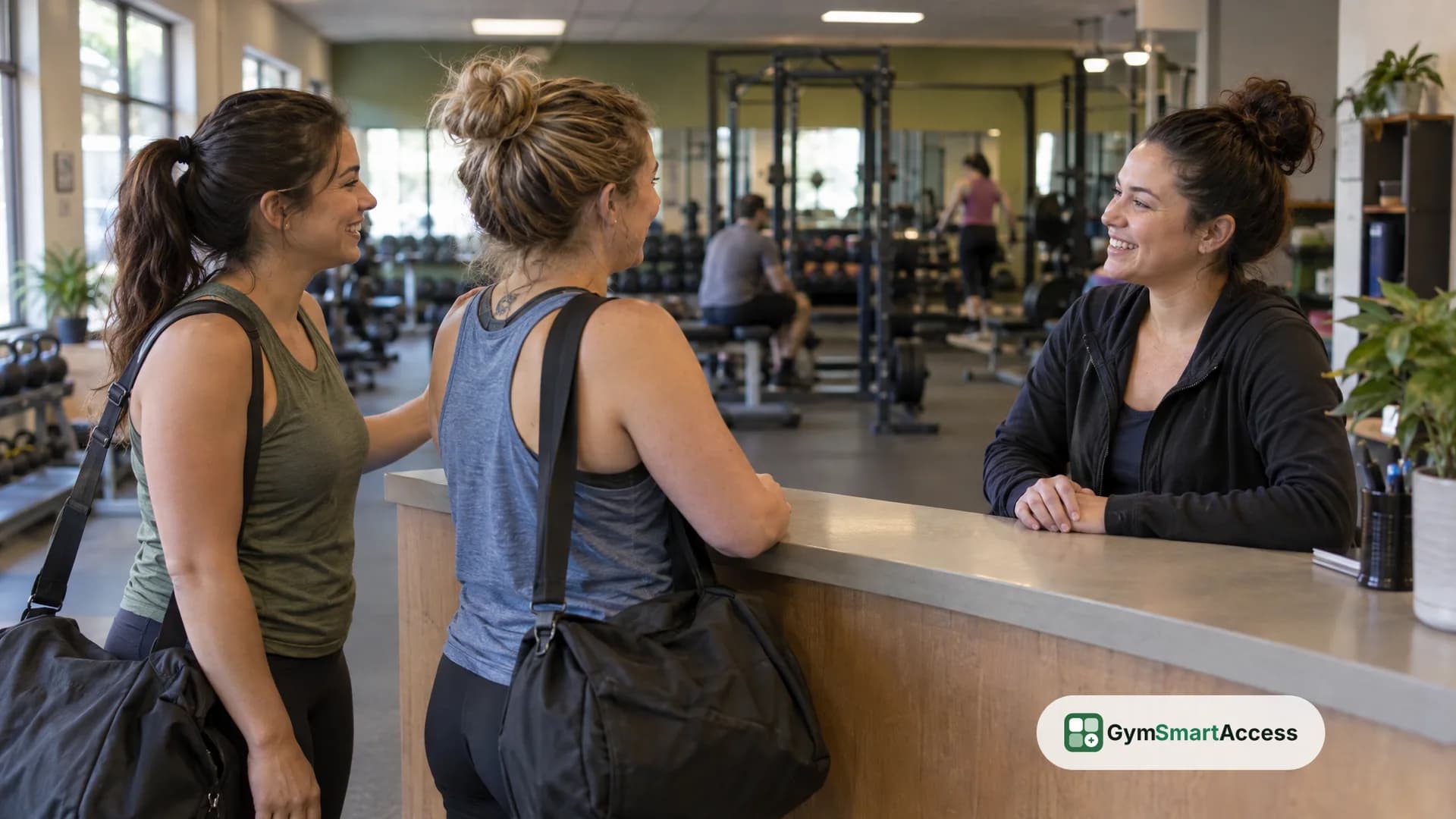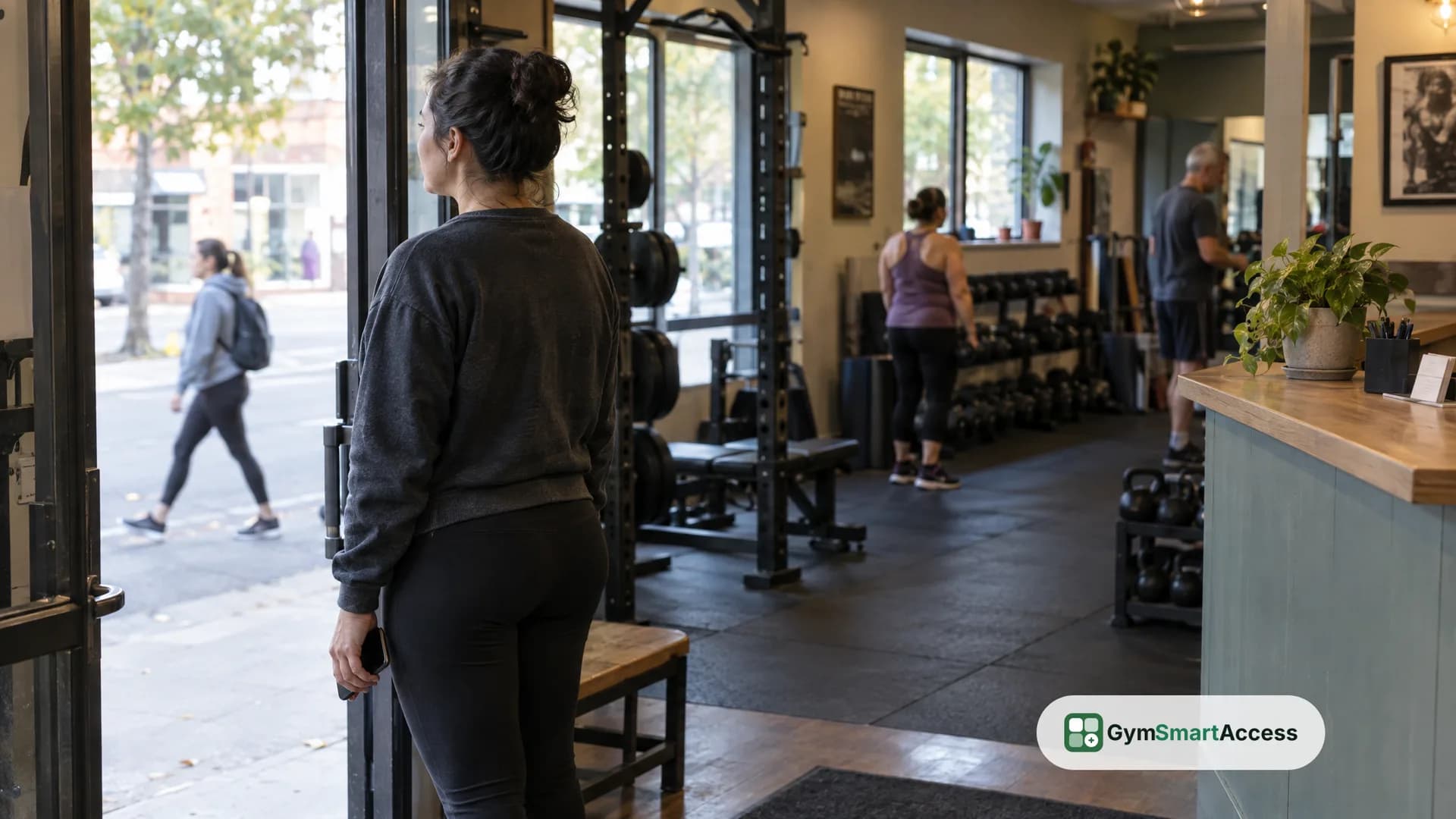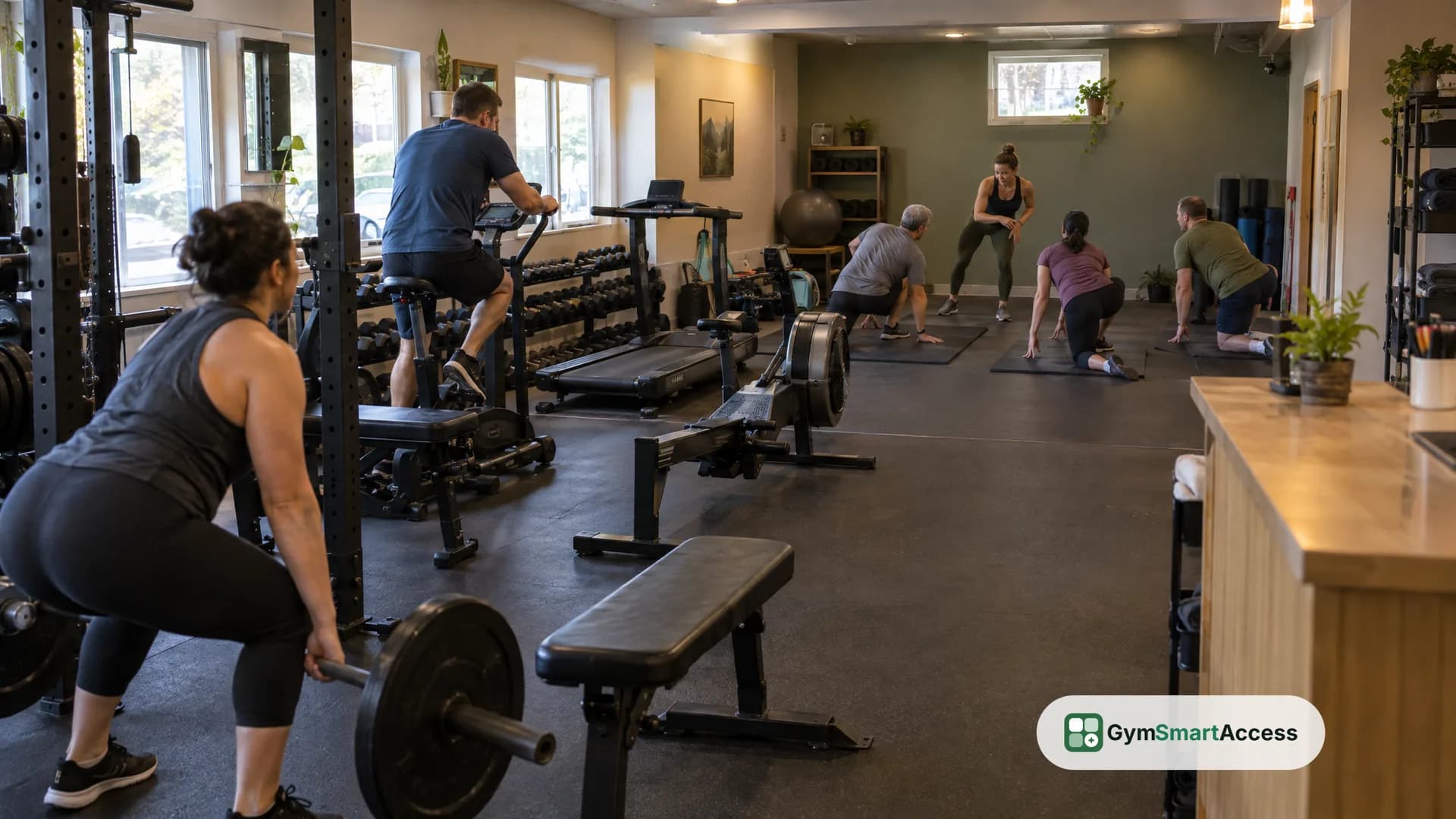
Six types of gyms are a useful way to compare models: the neighborhood gym, the boutique or specialty studio, the CrossFit box, the pilates or yoga studio, the 24-hour gym and the budget gym. They differ in how much space they need, how many people have to be on site, what they sell and how members get in. For a small independent owner, the useful question is not which type is best, but which one you can run well with your space, your team and your neighborhood. This article describes each model and what it changes for you as the owner. It gives no costs or market numbers, because those depend on where you are and who you ask.
What changes from one type to the next
Four things shift with the model, and they are a good way to compare one type with another:
- Space: how much floor you need, and whether it is open equipment or room for a class
- Staff: who has to be there, from a front desk person to a coach for every session
- Plans: whether you sell open access, classes or a mix, and how often the member pays
- Access control: who checks that the person at the door is a member in good standing, and how
Keep those four in mind as you read.
1. The neighborhood gym
A general gym with weights, a few cardio machines and open hours, serving the people who live or work nearby. It sells open access, usually with a few plan options, and people come at their own time.
- Space and staff: A room with equipment and a front desk. Staff is a person at the desk during open hours and, if you want, a coach on the floor at busy times.
- Plans: Simple plans: a monthly option and maybe a longer one, sometimes with limits on days or locations.
- Access: People come in and out all day, so the front desk is the main check. A QR code at the door lets members check in with their phone.
Almost any gym nearby competes with this model, so your atmosphere and the way you treat members carry a lot of weight.
2. The boutique or specialty studio
A small place built around one activity, such as boxing, barre, cycling or strength coaching, with a clear identity and a coach who leads every session.
- Space and staff: Less space than a general gym, but a coach is needed for each class, so payroll is a bigger part of the picture.
- Plans: Often by number of classes or by period, because members come to a schedule and not whenever they like.
- Access: Members arrive near class time, so the check is quick and concentrated in a few minutes.
The model asks for a clear sentence about who the studio is for, and a coach worth coming back to. It is easier to describe to a newcomer than a general gym, and harder to fill if the schedule does not suit the neighborhood.
3. The CrossFit box
A box centers on group classes led by a coach, in a bare, practical space with racks, barbells and open floor. Members often train together, so the room has a shared feel.
- Space and staff: Open floor and storage, with a coach for every class, and class sizes that depend on the space.
- Plans: Plans by period and sometimes by number of classes per week, with a schedule members plan around.
- Access: Check-in at class time, and a front area where people arrive together.
For how GymSmartAccess works in a box, see the page for CrossFit boxes.
4. The pilates or yoga studio
A studio built for classes, whether on mats, reformers or other equipment, in a quiet room with a small group per session. The instructor is the center of the offer.
- Space and staff: A calm room with a limited number of spots per class, and an instructor for each one. Capacity is set by the room and the equipment.
- Plans: Class packs or periods, with a schedule that members choose from.
- Access: Members come at class time. The question for the owner is who is expected in each session, and what to do when the room is full.
For how it works in a studio, see the page for pilates and yoga studios.
5. The 24-hour gym
A gym that members can use at any hour, often with few or no staff on site, relying on door hardware to let people in.
- Space and staff: A room with equipment and little or no staff on site, so the owner takes on the question of safety, cleaning and who responds if something happens at night.
- Plans: Open access, usually with a plan for each period.
- Access: This is the model that depends most on access control. The door has to open and close for the right people, which takes a lock or door system designed for it.
GymSmartAccess does not open doors. It records who checks in and shows the result, and a person acts on it. A 24-hour gym with no one on site needs a door system from another provider, and GymSmartAccess does not control it. If you want to run this model, start by finding out how the door will work.
6. The budget gym
A large, open space with equipment and few extras, designed to sell low-priced open access to many people.
- Space and staff: Space is the main asset, with a small team and little personal attention.
- Plans: Simple plans with a low price, built on a volume of members.
- Access: With a lot of people coming and going, the check at the door has to be quick.
For a small independent owner this is a hard model to start small, because it depends on volume, and volume needs space. Think carefully before choosing it as a first gym.
How to choose
Start from what you already have, and answer these questions in order:
- Who lives or works within a short walk of your space, and what are they missing?
- How many hours a week can you and your team be present?
- Do you prefer to sell access or to sell sessions led by a coach?
- Do you have the space for open equipment, or for a room for classes?
- How will people get in, and who checks?
Put the answers together in one line, such as "a small strength gym for people who work nearby, open early and late, with a coach on the floor at busy hours". A line like that is the model you will actually run, and it can be a mix of the types above: a neighborhood gym with a couple of classes, or a studio that also lets members train on their own.
Where the product fits
Whatever the model, you will need to know who is a member, what plan they are on and who came in. In GymSmartAccess you create the plans your gym sells and choose in which locations each one applies, and members check in by scanning your location's QR code with their phone. The product records the check-in and shows the staff who was turned down and why. See features and how it works, and pricing for the plans.
Get organized without changing how you work
Members, check-ins and recorded payments in one place. 30 days free, no card.
Try it free