To open a pilates studio, settle five things before you sign a lease: what you will teach (mat, apparatus or both), how many people fit in one class, what the full budget adds up to, how the weekly schedule and booking rules will work, and whether you can start smaller than you imagine. A pilates studio earns by the class, and the class has a hard limit on how many people it can hold, so almost every decision comes back to that number. This guide puts the decisions in order and shows you how to price each one with your own quotes, with no averages borrowed from other cities.
What it costs to open a pilates studio, line by line
No article can tell you what a studio costs in your city, with your landlord. In a pilates studio the budget follows the class: the machines or mats one full class needs, the room that holds them, and the people who teach. Price each group with written quotes, and next to every number write who gave it and the date.
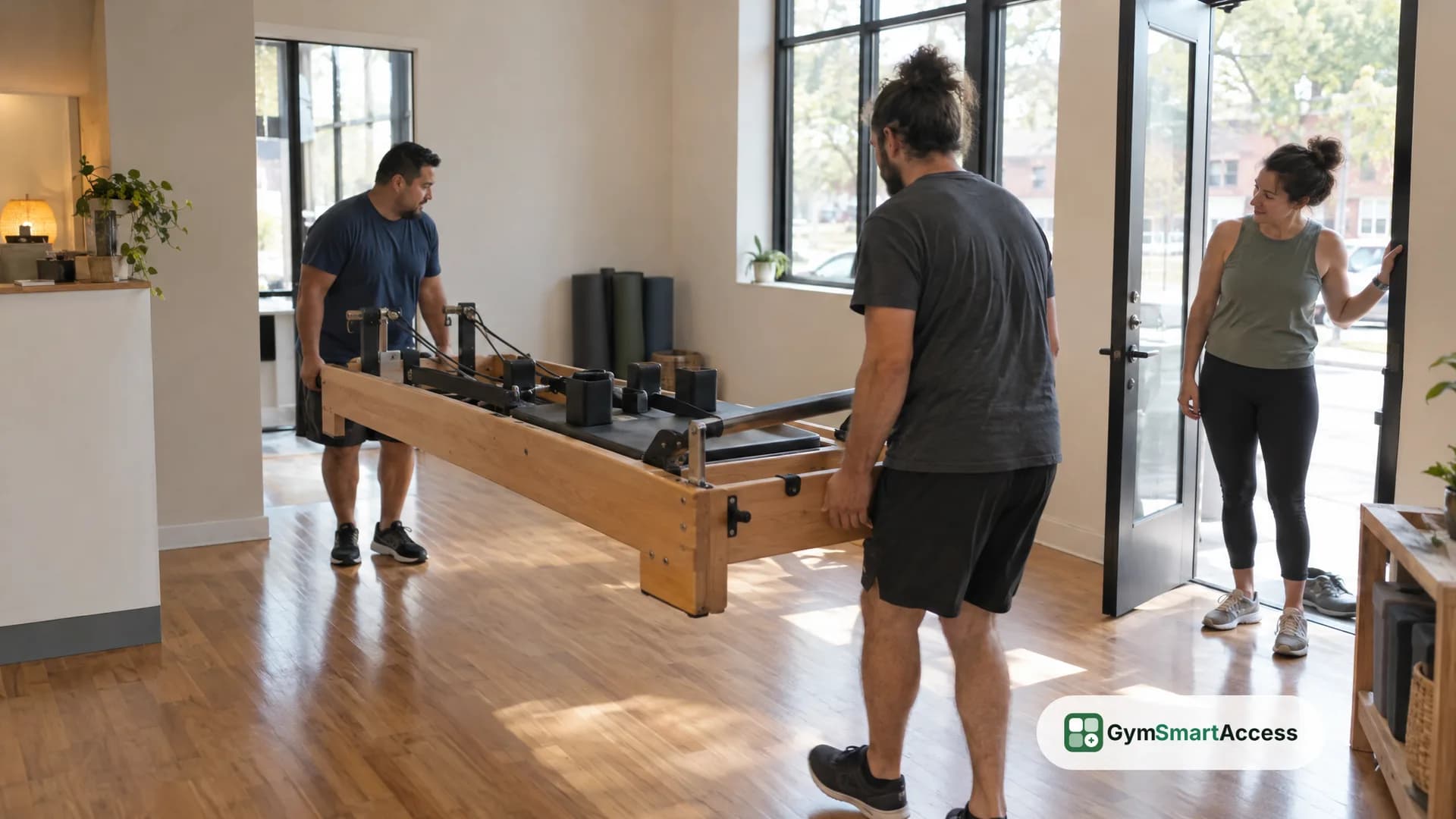
- The apparatus. One line per type of machine you plan to buy: reformers, chairs, towers or anything else your method uses. Ask each dealer whether delivery, assembly and the warranty are included, who services the springs and the upholstery, and what changes if you buy used or lease.
- Mats, props and small accessories. Count how many full sets one full class needs, plus spares.
- The room around the machines. Deposit and rent, then the build-out: flooring that can take the equipment, mirrors, lighting, ventilation, a changing area, a restroom and a place to wait. Ask the landlord in writing what you are allowed to change.
- Instructors. Paying them per class, per hour or a salary changes your monthly costs; ask an accountant how to hire each way.
- Paperwork and coverage. Registrations, licenses, legal fees and insurance, including what a client injured in class would mean for you.
- Opening. Signage, a website and the first promotion, separating what must exist on day one from what can wait.
- Software. The provider's pricing page, and what the first month and the contract look like.
- A reserve. The months of rent and pay you can cover while the schedule is still half empty.
Whether your instructors need a particular certification, and what your state, your city and your insurer ask of a pilates studio, are questions for those offices, an insurance broker and an accountant: this article does not answer them. Ask before you sign the lease, because the answers can change the space and the team, and keep a note of who answered and when.
Reformer or mat: the decision that sets the budget
Mat pilates and apparatus pilates (reformers, chairs, towers and similar equipment) are two different businesses on the invoice and on the floor plan.
- Mat. Each client needs a mat and some floor space. Equipment is a small line, so the room, the schedule and the instructors carry the business. The same room can hold more people per class and can host other classes in the same day.
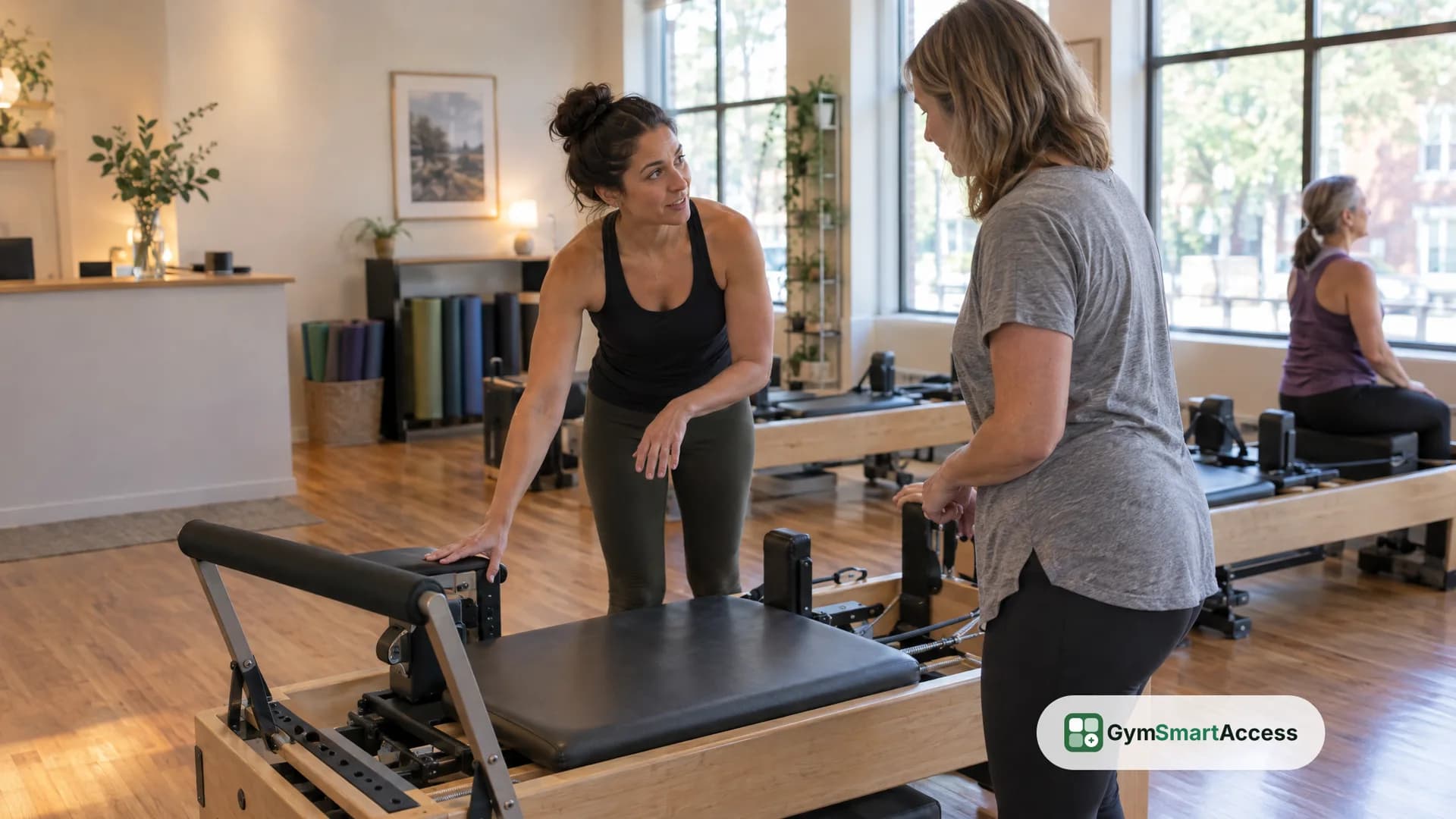
- Apparatus. Each client needs a machine, so the number of machines you can fit is your class size. The equipment line grows with every machine, and the room has to take them: ask about the floor and the space each one needs once assembled. Ask each manufacturer what instructor training comes with the equipment.
- Both. One way to start is with mat classes, adding apparatus once the schedule is full. If that is your plan, choose a room and a floor that can take the equipment later, and ask your landlord about it in writing now.
Pick your first offer by who you want in the room: adults who work during the day, older clients, athletes, people coming back from an injury. Each audience asks for different hours and class sizes. If part of your offer touches rehabilitation, decide in advance what your team can say and what belongs to a health professional.
Capacity, schedule and bookings
In a studio, capacity is what you sell. A class of a given size, at a given hour, with a given instructor, is the product, and an empty place at the end of the class cannot be sold later. Work through these in order:
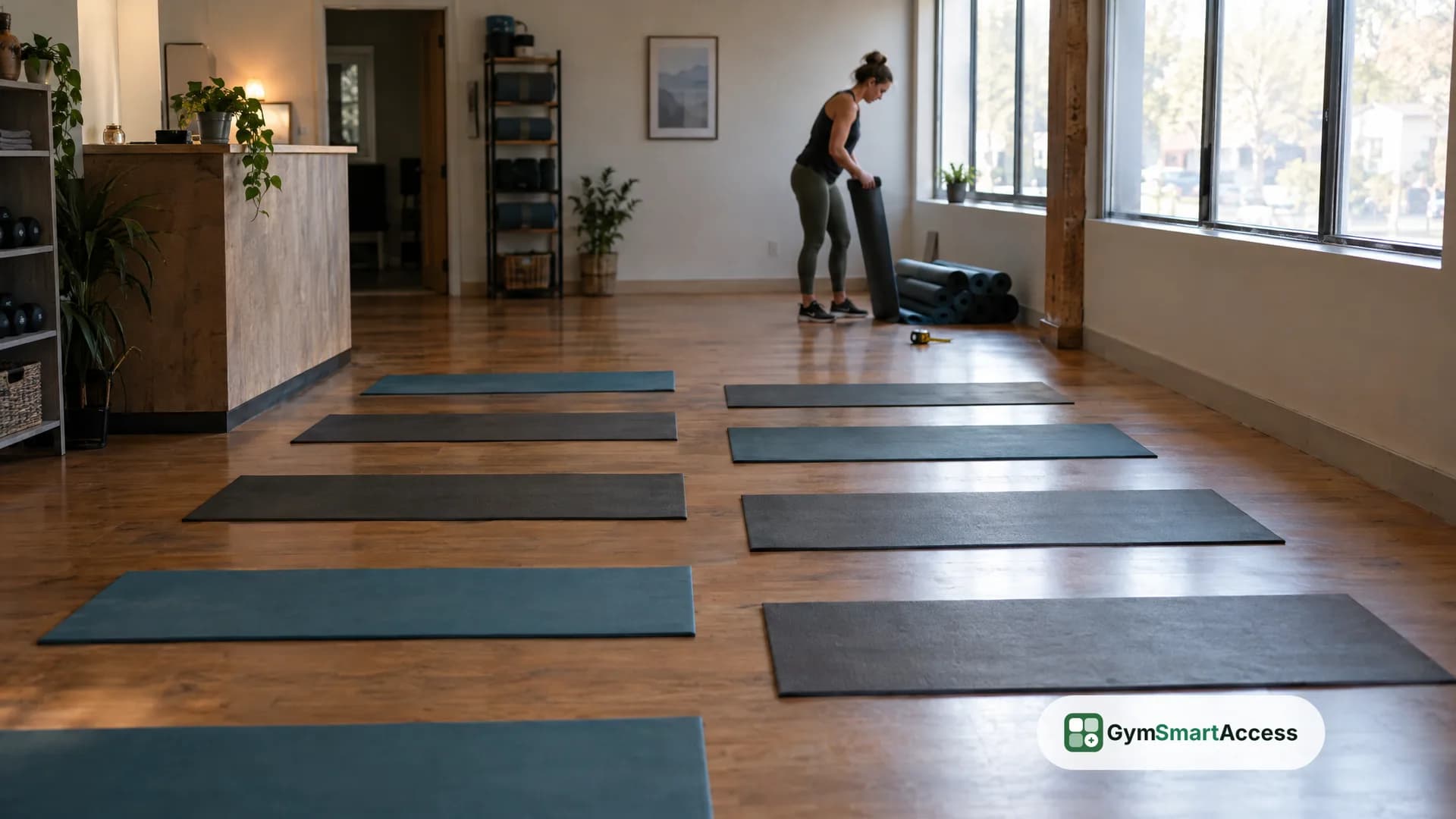
- Capacity per class. Draw the room with every machine or mat in place, with space to move and for the instructor to walk around. The number that fits is your maximum, and from it comes your maximum revenue per hour.
- Rooms. With one room, two classes at the same hour are impossible. Count what the rest of the space needs: reception, restroom, a place to wait, storage.
- The weekly grid. Plan hours around your clients' days, not around yours. Leave some places free for new clients and decide how many belong to people who come at the same hour every week.
- A full class. Decide who gets a place when the class is full, in what order, and how they are told if someone cancels.
- The cancellation rule, in writing. How long before class a client can cancel, what happens to a late cancellation, and how a missed class can be made up. A rule that is written and shared on the first day is a rule; improvised, it is an argument with each client.
A spreadsheet and a messaging app can run this for a handful of clients. They start to hurt when the grid has dozens of classes a week, a waitlist, and clients asking in three different places whether there is room on Thursday. That is the moment to look at a system.
A pilates studio business plan, built from the class
A pilates studio's business plan is short if you build it from the class. Use this arithmetic and fill it with your own quotes:
- Revenue of one class = places in the class × the average amount a place brings in × the share of places you expect to fill.
- Monthly revenue = revenue of one class × the number of classes a month.
- Break-even clients = your monthly costs (rent, instructors, insurance, software, utilities, everything) ÷ what one client pays per month.
Run it three times: with a schedule that is a quarter full, half full and nearly full. If the quarter-full case runs out of money before the half-full one arrives, you need a bigger reserve or a smaller start.
Starting small
A smaller start is not a lesser studio. It is a way to learn your schedule before you pay for it.
- If the space you want is more than your reserve allows, rent a room by the hour or share a space for your first months.
- Start with the equipment that fills most of your classes and add the rest when a waitlist proves that you need it.
- Open the hours you are sure about, and add the rest as the schedule fills.
Where a system fits
A studio's system has to handle classes and places before anything else. In GymSmartAccess you create each class once per location, with how many people it takes, how long it lasts and who teaches it, and you can add rooms so that two classes never share a room at the same hour. You enter the weekly timetable a single time, and the system keeps the next two weeks of classes published. For each class you also set how many minutes before the start a member can still book and cancel.
On their phone, members see the places left and book; no class takes more bookings than it has places, and someone who is behind on the fee is refused. When a class is full they can join the waitlist, see their number, and get the place, with an email and an app notice, when someone drops out. A client who comes at the same hour every week can tap "Book every week" to keep that spot, up to the days their plan allows, and your front desk can do the same for them. The class list shows who is in and who is waiting, and attendance is marked by the instructor or by the front desk.
Fees are paid at your front desk, in cash, by transfer or on the studio's own card terminal, and recorded on the member's profile, which brings the member up to date. A plan can run from one month to twelve and can be limited to some days of the week; class packs are not part of it. Late cancellations and no-shows are not charged or penalized by the system: your team applies your rule.
For a studio, see pilates and yoga studios, features and pricing. The free trial is 30 days, with no card.
Try it in your box or studio
Recorded payments, check-in and classes with capacity in one place. 30 days free, no card.
Try it free