Yoga studio marketing comes down to getting the right people into a first class, and then giving them a reason to book a second. A small studio has one room and a fixed number of mats, so the goal is not reach for its own sake: it is a full class at the hour you want it full, with people who live or work close enough to come every week. This guide covers who the studio is for, a one-page plan, the street around you, the first class, your teachers, your regulars and how to tell whether it is working. No number of students is promised here.
Start with who the studio is for
"Everyone who wants to relax" is not a group you can reach. Write one or two sentences about the person you most want in the room: a beginner who feels out of place in a big class, a runner who wants to stretch after long runs, someone who sits at a desk all day, a person looking for one quiet hour in a busy week. Then list what that person wants to know before walking in: what the class feels like, whether they need experience or flexibility, whether you lend mats, what to wear and how to book.
That description does the work of a marketing department in a small studio. It decides what you post, which styles go at which hours, what the window says and what you offer a first-time visitor.
A yoga studio marketing plan on one page
A yoga studio marketing plan does not need to be long. Write it on one page, date it, and pin it where you will see it:
- Who: the person from the section above.
- First step: what a newcomer can do first, and what it costs them.
- Where they will see you: two or three places, no more: the street around the studio, a page you can send, a group or venue where your kind of student already spends time, one social account.
- Who does each one: a name, and an hour in that person's week.
- How you will know: the four numbers in the last section of this guide, written down every month.
A task with no name next to it does not happen in a studio where the owner also teaches, sweeps and answers messages.
The street around the studio
A small studio lives on people who can reach it between work, school runs and errands, so start within walking distance:
- The window. A passerby should see a yoga room, not a gym or an office: the light, the mats, a plant, a class in progress if the students agree. Next to it, the week's classes by level, so a beginner can spot the one meant for them.
- Places where your students already are. A bookshop, a coworking space, a climbing gym, a running club, a parents' group at a school, a community center. Offer something only a yoga studio can: a short stretching session for their members, or a beginner workshop on a Saturday morning.
- Your own events. A free community class once a month, a workshop on one theme, such as breathing or yoga for desk workers, a class in a park where your city allows it. Each one gives a newcomer a date to come.
The first class decides the second
A first-timer may arrive with three worries: not being flexible enough, being the only beginner, and not knowing what to do. Answer all three before they arrive and again at the door:
- Say in the class description that no experience is needed, if that is true, and what the class will ask of them.
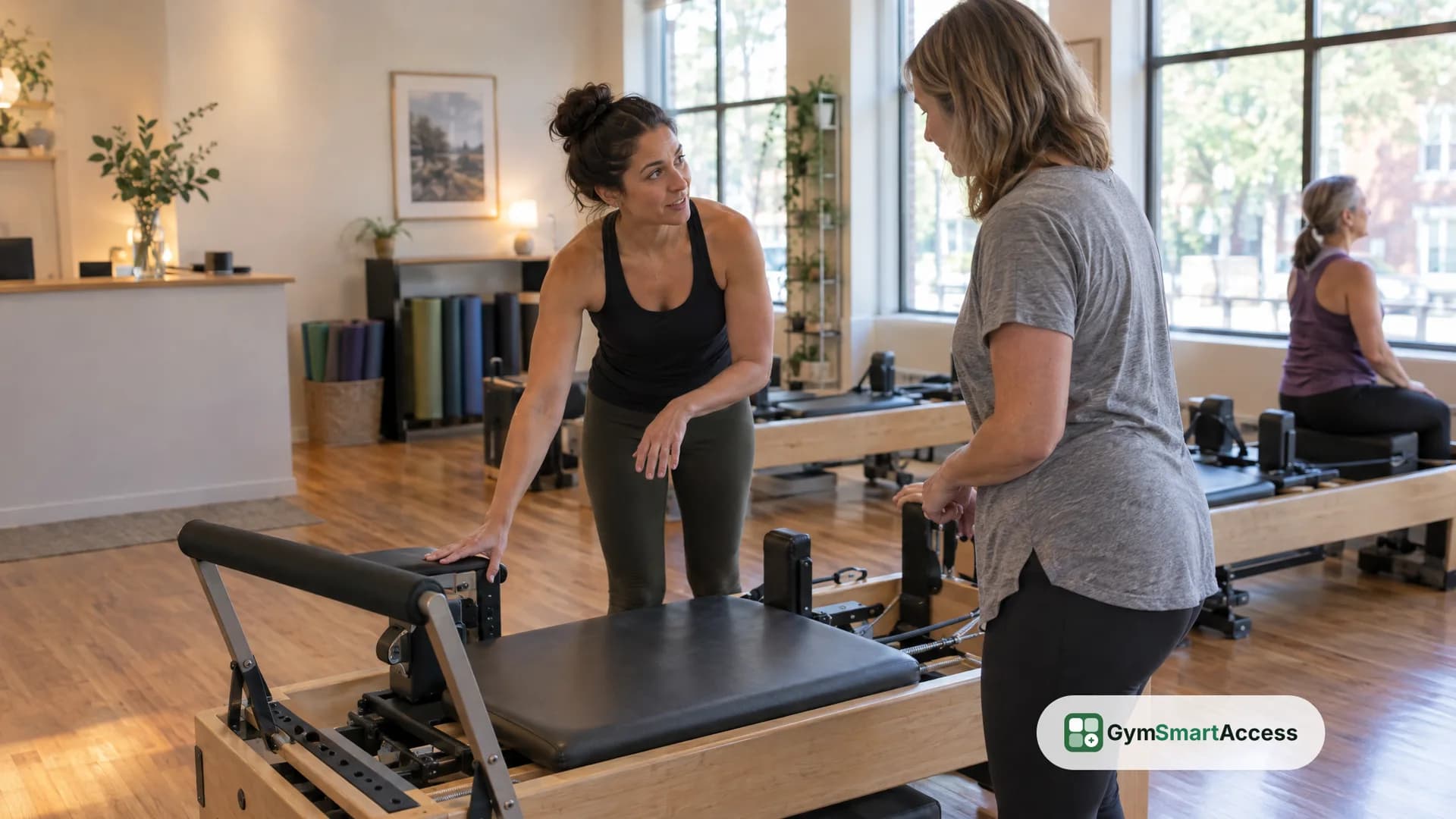
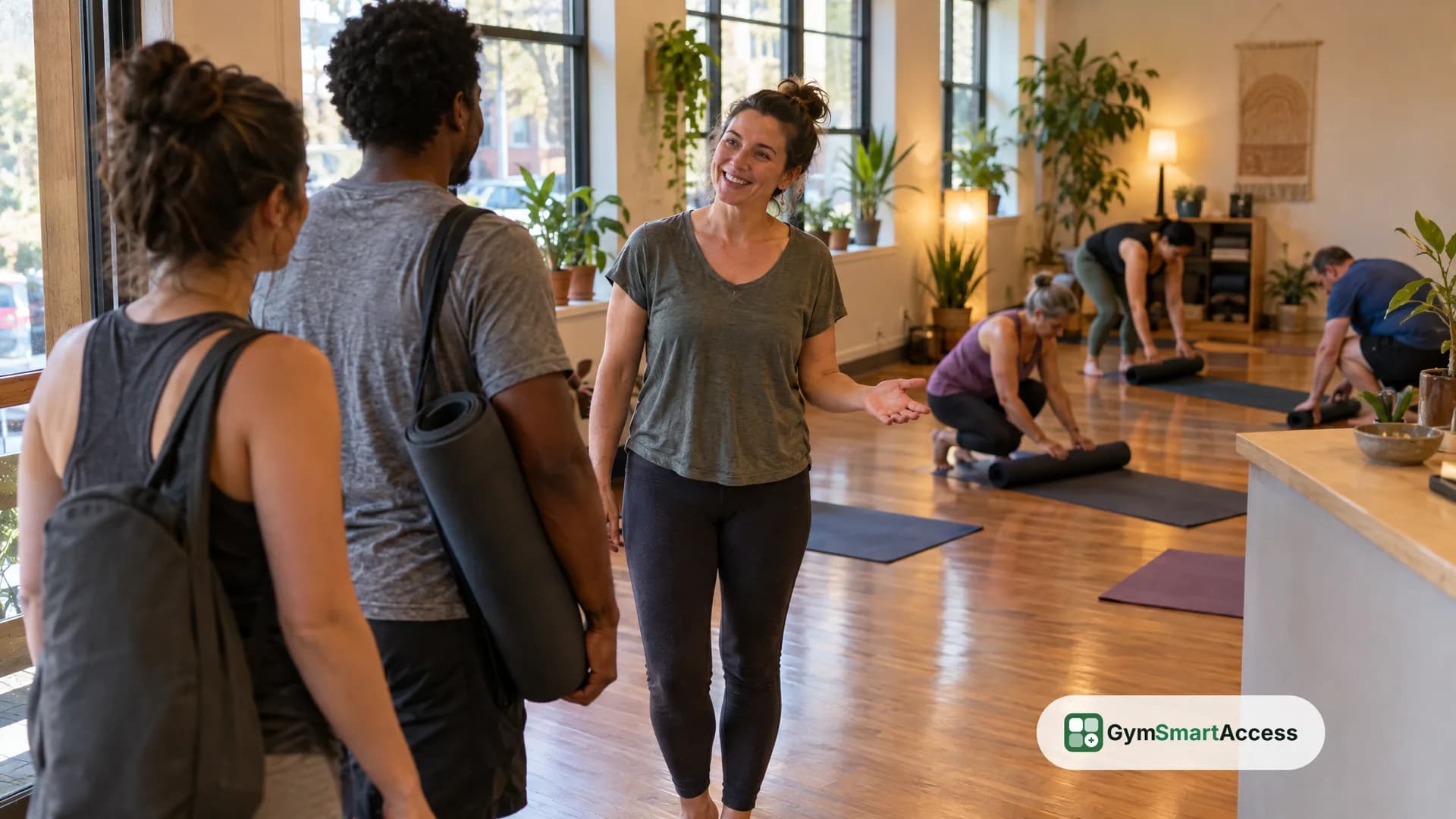
- Ask them to come ten minutes early, have a mat ready for them, and tell the teacher who is new before class starts.
- After class, let the teacher, not a template, suggest the next class that fits them, with its day and hour.
- Run a beginner series that starts on a fixed date, so newcomers start together instead of joining a room of regulars.
For the offer itself, GymSmartAccess lets a plan's price begin with a number of free days, which suits a first week on the house. A lower price meant for some people only, such as an introductory rate for a partner's staff, can be a plan that stays off the public page and is still given at the front desk. Both are set up in the plan, not improvised at the desk. GymSmartAccess does not run campaigns or send promotions: what you offer, and the message that announces it, are yours.
Put your teachers in front
In a small studio a student may choose the teacher before the style, so introduce each teacher as a person: how they teach, who their classes suit, what a student should expect in the room. Use real photos taken in your own space, not stock poses. If a teacher has their own following, ask whether they would mention the studio, and agree on what they say. When a teacher will be away, tell students ahead of time who covers.
In GymSmartAccess each instructor has a profile with a name, a photo and a biography. Keep the biography specific: "a slow class that explains every pose" tells a nervous beginner more than "an all-levels flow."
A page to send, and what students say
A student who recommends you needs something to forward: one link with the classes by level, the prices and the address. In GymSmartAccess, the studio's public page lives at its own address and carries its logo and colors, each location's hours and photos, and its plans and prices, with a QR code that opens it. Each location can add testimonials from members, with one to five stars if you want them, and links to its social accounts. Search engines do not list the page: it reaches people through the link and the QR, so put the code by the door and the link in your replies.
Quote a student only with their permission, and use their name only if they agree.
Keep the room full week after week
Regulars are what make a yoga room feel alive, and the habits that keep them are small:
- Learn names and use them.
- Leave a minute before and after class for people to talk.
- Mark a student's milestones: a first month, a first workshop, a pose they worked toward.
- Invite students to bring a friend to one specific class, and thank them in person.
Booking is part of the experience. In GymSmartAccess members reserve from their app, and no class takes more people than its places. When a class fills, the next person can join a waitlist and watch their position; a cancellation moves the first person waiting into the class, with a notice. A regular of the Thursday evening class can fix that spot from the app, so it is theirs every week, within the days per week of their plan; the front desk can also do it on their behalf. A student who tried to book, found the class full and heard nothing may not try again.
Notice who has stopped coming
Some students drift away without a word, and the studio's job is to notice before the habit is gone. In GymSmartAccess the Overview points out who has stopped showing up, ordered by urgency, with each person's phone number and a WhatsApp button to reach them. What you write is up to your team. A short note from the teacher ("We missed you on Tuesday; the new beginner series starts next week") sounds like the studio, not like an ad.
How to tell whether it is working
Keep four numbers every month, in a notebook or a spreadsheet:
- How many people took a first class.
- How many of them came back for a second.
- Where each one heard about you.
- Which classes have empty mats, and at which hours.
If many people try a class and few return, look after the door: the class, the welcome, the follow-up. If few people try it, look before the door: who knows about you and what you offer them. Change one thing at a time and write down the date, so you can tell later which change made the difference.
Where to start
Pick one thing for the street, one for the first class and one for your regulars. Put a name and an hour next to each, run them for two months, then read your four numbers and keep what they support.
For what the product does with a studio's timetable, bookings and waitlist, the page for pilates and yoga studios is the place to start, then features and pricing. The 30-day free trial needs no card.
Try it in your box or studio
Recorded payments, check-in and classes with capacity in one place. 30 days free, no card.
Try it free